This is featured post 1 title
Replace these every slider sentences with your featured post descriptions.Go to Blogger edit html and find these sentences.Now replace these with your own descriptions.
This is featured post 2 title
Replace these every slider sentences with your featured post descriptions.Go to Blogger edit html and find these sentences.Now replace these with your own descriptions.
This is featured post 3 title
Replace these every slider sentences with your featured post descriptions.Go to Blogger edit html and find these sentences.Now replace these with your own descriptions.
Tuesday, May 29, 2012
New telescope to be in South Africa, Australia
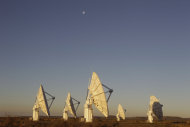
PRETORIA, South Africa (AP) — Australia and South Africa will share hosting of a giant radio telescope made up of thousands of separate dishes and intended to help scientists figure out the make-up of the universe, the international consortium overseeing the project announced.
South Africa led an African consortium that included Botswana, Ghana, Kenya, Madagascar, Mauritius, Mozambique, Namibia and Zambia, and telescopes will be erected in all its partners. In South Africa, dishes will be added to a remote site in the arid Karoo desert where a smaller radio telescope project already is underway.
South Africa and Australia, which partnered with New Zealand in bidding for the project, had competed fiercely. South Africa claimed victory Friday, saying it got two of the projects three major components.
"We may feel slightly disappointed that we didn't get the whole thing. But I think one should emphasize that we did get most of it," said Justin Jonas, the chief South African scientist on the project. "Two-thirds of the biggest instrument in the world is still the biggest instrument in the world."
South Africa's science minister Naledi Pandor and scientists who had prepared the country's bid celebrated with an Africa-shaped cake at a news conference in South Africa's capital.
"This marks a real turning point in Africa, where we are becoming a destination for science and engineering, and not just a place where there are resources and tourism opportunities," Jonas added.
Australia also welcomed the split decision.
"It is an outstanding result for the Australia-New Zealand bid after many years of preparation and an intensive international process," said Sen. Chris Evans, Australia's science minister.
The Square Kilometer Array telescope will be 50 times more sensitive and scan the sky 10,000 times faster than any existing telescope. It requires huge open spaces with very few humans.
John Womersley, chair of the consortium's board, said the telescope will help scientists answer key questions: "Where do we come from? Where are we going? What is this universe we live in?"
"We don't understand what 96 percent of our universe is made of," he said.
The organization said dividing construction of the telescope will "maximize on investments already made by both Australia and South Africa."
Womersley said that splitting construction between the two nations will likely add around 10 percent to the €350 million ($439 million) cost of the first phase of building the giant telescope. But he said there would be a payoff for astronomers.
"It delivers more science in phase one. The capabilities of this instrument are greater than the original design," Womersley said.
View the original article hereApple CEO Cook gives up $75M in stock dividends
NEW YORK (AP) — Apple CEO Tim Cook is giving up $75 million in dividends on restricted stock that the company is awarding to all of its employees.
In a filing with the Securities and Exchange Commission on Thursday, Apple Inc. said that Cook requested that his restricted stock units not receive dividends. The dividends that Apple workers are getting amount to $2.65 per quarter for each restricted stock unit held. The shares are not normally eligible to receive dividends, so Apple's decision is a perk for its employees.
The decision comes two months after Apple introduced a regular dividend and authorized a $10 billion stock buyback program to start giving some of its cash hoard back to shareholders. It was a move that former CEO Steve Jobs long resisted. After his death last year, Apple's management has signaled that it's been considering options for the money, which amounted to nearly $100 billion.
Even without the dividend, Cook, 51, remains one of the highest-paid CEOs in America. His pay package was valued at $378 million when he became Apple's chief in August. That was almost entirely in stock awards, some of which won't be redeemable until 2021, so the value could change dramatically.
Assuming Apple pays quarterly dividends of $2.65 over the vesting period of Cook's shares, the company said he will give up about $75 million in value.
Shares of Cupertino, Calif.-based Apple fell $5.60 to $559.72 in afternoon trading Friday. The stock has traded between $310.50 and $644 over the past year.
View the original article hereSamsung Galaxy S3 gets head start on rival iPhone
SEOUL (Reuters) - Samsung Electronics Co launches its latestGalaxy S smartphone in Europe on Tuesday, with the third generation model expected to be even more successful than its predecessor, which helped the South Korean company toppleApple Inc as the world's top smartphone maker.
The Galaxy S3, running on Google's Android operating system, boasts a 4.8-inch screen, bigger than the 3.5-inch display on the iPhone 4S and the 4.7-inch screen on HTC's One X model.
In the kind of anticipation that has become the norm for new Apple gadget releases, hopeful customers began queuing outside an electronics retail store in Berlin on Monday night eager to be the first to lay their hands on the S3.
Major global carriers - from Vodafone to Singapore's SingTel - have been aggressively promoting the S3, fuelling speculation the smartphone could top the Galaxy S2's 20 million unit sales worldwide.
"In the two years that we've been offering pre-orders, it's the most pre-ordered Android device we've had in our line-up," said a spokesman for Vodafone UK, declining to disclose exact numbers. "It's on track to meet, if not exceed, the level of pre-orders we expected by the time it actually launches."
Samsung introduced its first Galaxy in 2010, three years after the iPhone's debut, to counter Apple's roaring success in smartphones at a time when other rivals such as Nokia were struggling to make much impact.
Samsung sold 44.5 million smartphones in January-March - equal to nearly 21,000 every hour - giving it 30.6 percent market share. Apple sold 35.1 million iPhones, taking 24.1 percent market share.
"The Galaxy S3 is a real challenger to the upcoming iPhone," said Francisco Jeronimo, an IDC analyst based in London. "This is likely be one of the most sold smartphones this year, though the real test will come when the next iPhone is launched."
The race for global smartphone supremacy comes as Apple has accused Samsung of copying some of its products. The South Korean company counter-claims that Apple has infringed its patents. Both have denied the allegations, and a long-running court saga continues.
Apple plans to use a larger screen on the next iPhone, according to people familiar with the situation. The iPhone 4S was introduced last October.
MORE ROUNDED
In a departure from its predecessor, whose look and feel became the main subject of the legal dispute with Apple, the latest Galaxy has a more rounded outline. It also has voice recognition, dubbed S Voice, which will inevitably be compared to Apple's Siri, and image recognition software that can tag and share photographs.
Prices vary depending on the contract. A model with 16 gigabytes of memory costs up to 189 pounds ($300) under a 12-month contract with Vodafone. A similar package for the iPhone 4s costs 159 pounds, but comes with a more expensive monthly data plan.
Samsung said it will release the S3 via 296 carriers in 145 countries by July.
Profit from Samsung's mobile division nearly tripled in January-March to $3.6 billion, accounting for 73 percent of operating profit.
Samsung - whose shares have gained 82 percent since late-August, beating Apple's 58 percent rise - is now banking on an aggressive marketing campaign ahead of the summer London Olympics to further drive sales. It has said its mobile market share in China doubled after the 2008 Beijing Olympics.
View the original article hereFoxconn reportedly begins taking orders for the Apple TV
Apple’s Chinese manufacturing partner Foxconn has reportedly begun accepting orders to build an Apple TV set, according toChinese news website Sina. The publication’s sources claim the long rumored iTV is currently in the “trial production stage,” however more details were not given. Earlier this month Foxconn’s CEO denied that his company would soon begin manufacturing a television for Apple. It has long been rumored that the Cupertino-based company was looking to enter the TV market with an HDTV that will reportedly look much like the company’s current LED Cinema Display. The device is said to feature an aluminum casing, iOS, Siri voice controls and an iSight camera for FaceTime video chats. Earlier reports claim that the device would debut later this year, however some reports peg it to launch in 2014.
[Via Business Insider]
Monday, May 28, 2012
Powerful "Flame" cyber weapon found in Iran
- Article: Factbox: Five facts about "Flame"10 hrs ago
VIEW SLIDESHOWS
-
Students, Quebec government in conflict
15 photos - 5 hrs ago -
Photos of the Day
47 photos - 9 hrs ago -
Heat trounce Celtics in Game 1
16 photos - 4 hrs ago
BOSTON (Reuters) - Security experts said on Monday a highly sophisticated computer virus is infecting computers in Iran and other Middle East countries and may have been deployed at least five years ago to engage in state-sponsored cyber espionage.
Evidence suggest that the virus, dubbed Flame, may have been built on behalf of the same nation or nations that commissioned the Stuxnet worm that attacked Iran's nuclear program in 2010, according to Kaspersky Lab, the Russian cyber security software maker that took credit for discovering the infections.
Kaspersky researchers said they have yet to determine whether Flame had a specific mission like Stuxnet, and declined to say who they think built it.
Iran has accused the United States and Israel of deploying Stuxnet.
Cyber security experts said the discovery publicly demonstrates what experts privy to classified information have long known: that nations have been using pieces of malicious computer code as weapons to promote their security interests for several years.
"This is one of many, many campaigns that happen all the time and never make it into the public domain," said Alexander Klimburg, a cyber security expert at the Austrian Institute for International Affairs.
A cyber security agency in Iran said on its English website that Flame bore a "close relation" to Stuxnet, the notorious computer worm that attacked that country's nuclear program in 2010 and is the first publicly known example of a cyber weapon.
Iran's National Computer Emergency Response Team also said Flame might be linked to recent cyber attacks that officials in Tehran have said were responsible for massive data losses on some Iranian computer systems.
Kaspersky Lab said it discovered Flame after a U.N. telecommunications agency asked it to analyze data on malicious software across the Middle East in search of the data-wiping virus reported by Iran.
STUXNET CONNECTION
Experts at Kaspersky Lab and Hungary's Laboratory of Cryptography and System Security who have spent weeks studying Flame said they have yet to find any evidence that it can attack infrastructure, delete data or inflict other physical damage.
Yet they said they are in the early stages of their investigations and that they may discover other purposes beyond data theft. It took researchers months to determine the key mysteries behind Stuxnet, including the purpose of modules used to attack a uranium enrichment facility at Natanz, Iran.
If Kaspersky's findings are validated, Flame could go down in history as the third major cyber weapon uncovered after Stuxnet and its data-stealing cousin Duqu, named after the Star Wars villain.
The Moscow-based company is controlled by Russian malware researcher Eugene Kaspersky. It gained notoriety after solving several mysteries surrounding Stuxnet and Duqu.
Officials with Symantec Corp and Intel Corp McAfee security division, the top 2 makers of anti-virus software, said they were studying Flame.
"It seems to be more complex than Duqu but it's too early to tell its place in history," said Dave Marcus, director of advanced research and threat intelligence with McAfee.
Symantec Security Response manager Vikram Thakur said that his company's experts believed there was a "high" probability that Flame was among the most complex pieces of malicious software ever discovered.
At least one rival of Kaspersky expressed skepticism.
Privately held Webroot said its automatic virus-scanning engines detected Flame in December 2007, but that it did not pay much attention because the code was not particularly menacing.
That is partly because it was easy to discover and remove, said Webroot Vice President Joe Jaroch. "There are many more dangerous threats out there today," he said.
MAPPING IT OUT
Kaspersky's research shows the largest number of infected machines are in Iran, followed by Israel and the Palestinian territories, then Sudan and Syria.
The virus contains about 20 times as much code as Stuxnet, which caused centrifuges to fail at the Iranian enrichment facility it attacked. It has about 100 times as much code as a typical virus designed to steal financial information, said Kaspersky Lab senior researcher Roel Schouwenberg.
Flame can gather data files, remotely change settings on computers, turn on PC microphones to record conversations, take screen shots and log instant messaging chats.
Kaspersky Lab said Flame and Stuxnet appear to infect machines by exploiting the same flaw in the Windows operating system and that both viruses employ a similar way of spreading.
That means the teams that built Stuxnet and Duqu might have had access to the same technology as the team that built Flame, Schouwenberg said.
He said that a nation state would have the capability to build such a sophisticated tool, but declined to comment on which countries might do so.
The question of who built flame is sure to become a hot topic in the security community as well as the diplomatic world.
There is some controversy over who was behind Stuxnet and Duqu. Some experts suspect the United States and Israel, a view that was laid out in a January 2011 New York Times report that said it came from a joint program begun around 2004 to undermine what they say are Iran's efforts to build a bomb.
The U.S. Defense Department, CIA, State Department, National Security Agency, and U.S. Cyber Command declined to comment.
Hungarian researcher Boldizsar Bencsath, whose Laboratory of Cryptography and Systems Security first discovered Duqu, said his analysis shows that Flame may have been active for at least five years and perhaps eight years or more.
That implies it was active long before Stuxnet.
"It's huge and overly complex, which makes me think it's a first-generation data gathering tool," said Neil Fisher, vice president for global security solutions at Unisys Corp. "We are going to find more of these things over time."
Others said cyber weapons technology has inevitably advanced since Flame was built.
"The scary thing for me is: if this is what they were capable of five years ago, I can only think what they are developing now," Mohan Koo, managing director of British-based Dtex Systems cyber security company.
Some experts speculated that the discovery of the virus may have dealt a psychological blow to its victims, on top of whatever damage Flame may have already inflicted to their computers.
"If a government initiated the attack it might not care that the attack was discovered," said Klimburg of the Austrian Institute for International Affairs. "The psychological effect of the penetration could be nearly as profitable as the intelligence gathered."
(Additional reporting by Jim Wolf in Washington, Daniel Fineran in Dubai and William Maclean in London; editing by Edward Tobin, Ron Popeski and Mohammad Zargham)
View the original article hereFacebook smartphone could come by next year: report
VIEW SLIDESHOWS
-
Students, Quebec government in conflict
15 photos - 5 hrs ago -
Photos of the Day
47 photos - 9 hrs ago -
Heat trounce Celtics in Game 1
16 photos - 4 hrs ago
Facebook hopes to release its own smartphone by next year, as the newly public social networking giant looks to boost its revenue in the mobile Internet market, the New York Times reported Monday.
The company has hired more than half a dozen software and hardware engineers who have worked on Apple's bestselling iPhone and one engineer who has iPad experience, the paper said, citing employees and other unnamed sources.
It has also expanded a group working on a partnership with Taiwan's HTC to create a smartphone codenamed "Buffy" -- a project first revealed last year by technology blog All Things Digital.
One former Apple engineer who worked on the iPhone and was recruited said he had met with Facebook chief Mark Zuckerberg"who then peppered him with questions about the inner workings of smartphones," the report said.
"Mark is worried that if he doesn't create a mobile phone in the near future that Facebook will simply become an app on other mobile platforms," a Facebook employee told the New York Times.
When asked for comment, Facebook neither confirmed nor denied the report.
"Our mobile strategy is simple: we think every mobile device is better if it is deeply social," it said in a statement emailed to AFP.
"We're working across the entire mobile industry; with operators, hardware manufacturers, OS providers and application developers to bring powerful social experiences to more people around the world.
Facebook's initial public offering this month raised a record $16 billion but has sparked fury, and lawsuits, amid concerns that key information about the outlook for the company might not have been made widely available.
The company said earlier this month that it was launching an App Center for mini-programs that plug offerings such as Pinterest or Draw Something into the leading social network, which has more than 900 million members worldwide.
View the original article hereMicrosoft appoints first official Iraq distributor
VIEW SLIDESHOWS
-
Students, Quebec government in conflict
15 photos - 5 hrs ago -
Photos of the Day
47 photos - 9 hrs ago -
Heat trounce Celtics in Game 1
16 photos - 4 hrs ago
BAGHDAD (AP) — Microsoft Corp. said Monday it has appointed alocal company to distribute its products in Iraq, calling the move a sign of progress for the country.
Microsoft's manager of Business Development for Emerging Markets, Rajai S. El-Khadem, said the software giant had chosen the Baghdad-based Legend Lands Co. as its Iraqi partner.
"This is a big step for Microsoft and for Iraq," said El-Khadem. "As of today Microsoft will be officially and locally represented in Iraq ... to provide Microsoft licenses, support and services for our clients and resellers."
El-Khadem called the Iraqi market a "promising and aggressive" one that "needs to be served at the same level as all the other countries." But he also called on the Iraqi government to approve laws that protect intellectual property rights and usage of software.
Decades of war and U.N. sanctions have created sweeping technology shortages in Iraq, and the government's limited supervision over the sector has overwhelmed the market with illegal software products.
The CEO of Legend Lands Co., Ahmed Izzedien, said his company will provide a wide range of software products that address the needs of the government, public and private sector and home users. The company will also provide support and services through a network of resellers nationwide.
"Things have changed in Iraq in a way that needs to address the major needs such as updating software used by the government ... and to move in parallel with economic development, mainly in the oil sector," he said.
View the original article hereMonday, May 21, 2012
Nasdaq seen struggling with aftermath of Facebook IPO
Initially, the
exchange said it plans to set aside $13 million to resolve bad trades,
and even if all of that was used, the cost would be minimal compared
with the $387 million in net income it reported last year.
The bigger hit to Nasdaq's business is likely to come from the damage done to its reputation by the stumble. Nasdaq
failed on Friday to return order confirmations to some investors for
hours and delayed the start of trading by 30 minutes because of problems
with its systems.
The problems
compounded investor anxiety about Facebook and whether retail investors
would get shares, helping to turn what investors hoped would be a
double-digit first-day pop into a fizzle with a rise of less than 1
percent. Some brokers reported Monday that they still had not received
order confirmations.
IPOs contribute to Nasdaq's U.S. listings business,
which earned $173 million in revenue out of a total $1.69 billion last
year, and could be the biggest casualty in the months ahead.
Nasdaq may have
trouble competing for future "ultra-large" IPOs, said former Nasdaq Vice
Chairman David Weild, who is an adviser at Grant Thornton LLP.
"This will be brought up in those discussions, certainly," he said.
Waiting to
capitalise on the snafu is Nasdaq's arch rival, the New York Stock
Exchange, owned by NYSE Euronext. The two have been locked in an intense
battle for new listings in recent years, and winning the Facebook IPO, the first U.S. company to go public with a valuation greater than $100 billion, had been seen as a major coup for Nasdaq.
Now, Nasdaq faces a Securities and Exchange Commission investigation of issues behind the botched IPO.
BLACK EYENasdaq still has some advantages on its side. It is one of only two major players in the U.S. listing business and because both are unique in terms of offerings, brands, fees and listing standards, some said Nasdaq's IPO pipeline should stay robust.
"Of course it's a
black eye and of course it's embarrassing and of course it's a negative,
but I don't think anything is going to change in terms of their market
share in the listings business," said Macquarie Securities analyst Ed
Ditmire.
Indeed, shares of
Nasdaq rose 3.6 percent Monday to close at $22.78, outpacing the Nasdaq
100 index, even as shares of Facebook tumbled 11 percent to close at
$34.03, well below the $38 IPO price. Nasdaq shares tumbled more than 4
percent on Friday.
And Nasdaq's liabilities for customer losses are capped
at $3 million per month because of legal and regulatory protections.
Every Nasdaq member signs a membership agreement signing off on that
cap.But the problems from Facebook's debut prompted Nasdaq to say on Monday that it was changing its IPO procedures, and would use for IPOs the software it currently runs for its regular opening and closing numbers, rather than the software in place during Facebook's market launch.
And its failure to respond to media questions during Friday's crisis, or to reveal much about what went wrong afterwards, only heightened concern that the exchange is not as transparent as it needs to be.
Nasdaq Chief Executive Robert Greifeld
waited until Sunday to tell reporters that a malfunction in Nasdaq's
trading system design led to the delay in Facebook's trading launch and
confirmations of buy and sell orders.
Nasdaq said it had all orders, executed or not,
returned to member firms by 1:50 p.m. Eastern Daylight Time (1750 GMT)
on Friday.But on Monday, some firms were still trying to sort out the pieces.
"Although some executions were reported back from market makers over the weekend, we are still waiting for final responses on other orders," a spokesman for Fidelity Investments told Reuters in an email.
Some clients at Charles Schwab Corp were also awaiting confirmation on orders, a spokesman said, and an adviser at Morgan Stanley Smith Barney said that firm has a large number of market orders entered on Friday that still have not been reconciled.
LOSSES AND LIABILITIES
"This was arguably
the worst performance by an exchange on an IPO ever," Thomas Joyce,
Chief Executive of Knight Capital Group, said on Monday on CNBC. (Link
to the CNBC interview on Reuters Insider: http://r.reuters.com/qev38s)
Joyce said that his
firm, like dozens of others, lost money in the Facebook IPO process
because they did not know which trades were going through for two hours
on Friday.
The Financial
Industry Regulatory Authority (FINRA) has been tasked with reviewing
requests from investors whose orders were not filled at the opening
price of $42 or less, Nasdaq said on Monday.
FINRA officials declined comment, other than to say Nasdaq was overseeing all announcements on the topic.
FINRA's enforcement
reach extends only to brokerages, but conclusions about Nasdaq's
possible role in Friday's trading problems could help investors who may
have lost money due to the delayed start of Facebook's IPO, said George
Brunelle, a New York-based lawyer who advises brokerages.
Nasdaq would be
immune to suit only in the context of its self-regulatory functions.
Friday's incident likely stemmed from "Nasdaq as an order processing
facility," Brunelle said. "There have to be a lot of red faces."


12:21 AM
mobitech